Wednesday, September 17, 2014

Reflections on an Anniversary

The 17th of this month is the anniversary of when I started at Lien Animal Clinic.  I have been at Lien for 24 years. I have practiced veterinary medicine now for half of my life. You’d think I’d get it right by now and stop calling it practice. J
I graduated from WSU in 1989, a few months after my 24th birthday. I was very young and desperately wanted to be good at this. I accepted an internship in Rochester, NY at a group of seven hospitals to pursue that goal. I worked the hours. I saw the emergencies all night. I lived and breathed the profession in lieu of all else. At some point, I looked up and it was going well. There were teachers among the doctors, there were staff who helped me learn and there were clients that had faith in me. I walked out of the experience fundamentally changed from when I had walked in. I drove away in my little yellow truck with Dr. Fritzler (then she was just Beth), our two dogs, Camille and Cloie, and “New York is Not My Home” by Jim Croce queued up in my cassette player. We took a month to meander back across the country.  There’s a small motel in Illinois whose baseboards were never the same; Camille was just a puppy at the time and may have needed something to chew on.
            Beth still had a year of veterinary school left in Pullman. I moved back to Seattle to work for a year and then we planned to reconsider where we wanted to live. I interviewed at seven clinics. I remember being annoyed at trying to find parking at Lien when I went to interview. Completion of an internship played well and I had offers at all of the practices. Some of them were much bigger. Most of them were nicer facilities.  Anyone who knew the old Lien clinic knows that it was not a place of fantasies. My first desk was in the treatment room next to the only treatment table. Surgery had no windows. The building in general was very dark. The waiting room paneling is somewhere in a museum to the 1970’s next to an avocado colored refrigerator. But, there was something about Dr. King. Larry was genuine. You trusted him instantly and you knew he cared. I liked and trusted his wife Connie as well.  I chose them over glitzier surroundings and I can look back on that decision as one of the best gut decisions I ever made. 
So, on September 17th, 1990 I started working at Lien. It was just Larry and I. He had been by himself for many years.   I still don’t know how he did that. We were busy. I saw tons of cases and we helped each other. We did good work. He and I shared emergency calls 24/7 and it was daunting. When that first year was up, I stayed. I liked my job, the clients and the people I worked with.  Beth came over to the west side after graduation. We moved off and on for several years trying to stay close to both our jobs.  We got married in 1992 and moved to Vashon Island in 1994. On the island, we could have our horses and we planned on raising a family. Our first son, Geoffrey, was born in 1995 and Beth joined Lien part time in 1996. She joined the clinic with the intent that we would eventually buy it from Larry and Connie.
So Beth and I started practicing together 2 days a week in 1996 and it was fantastic.  It has been a positive shared experience. Even in the small confines of that building, it was never too much togetherness.  We each had our own patients and surgeries but we always had each others backs. We could always relate to each others struggles and triumphs. In December of 1997 our daughter, Aubrey, was born. We bought the clinic in February of 1999.
Ownership has brought an enormous set of challenges and required the development of a very different array of skills. Our youngest son, Nick, was born in 2002. While the struggles have been great, so too have the rewards. We were able to replace the old building in 2009.  There are now seven doctors working at the clinic. 
            I grew up here and I have watched the clinic emerge into the bustling entity it has become.  I watched the profession grow and change.  I also have seen my kids grow up here.  Nick wants to be a veterinarian.  Aubrey works now as a receptionist.  Geoffrey just applied to veterinary school at WSU. 

Sometimes one ponders what they have done with all the time.  For me, at least during insightful moments, I can see the years weaved into all that surrounds me.

Timothy R Kraabel, DVM, DABVP (Canine/Feline Practice)

Monday, September 15, 2014

How old is my pet?

While we all know that pets age faster than their owners, it is not always clear how much.  Conventional wisdom has typically estimated pet aging at about 7 years per year of human life.  This rule-of-thumb becomes obviously inadequate for cats and large dogs.

Many factors come into play in determining lifespan.  Species, breed, size, heredity, diet, spay/neuter status, veterinary care, and lifestyle (such as, indoor or outdoor for cats) all factor into length of life.  In dogs in particular, size matters.  Big dogs don't live as long.  Small dogs may not be "senior" until 10-12 years old, while giant breeds may be "senior" at 5 years old.  Routine physical examinations, proper nutrition,  preventative care, and appropriate senior care are the best ways to tip the lifespan balance in our favor.

The chart below is a rough guide to consider your pets real age.

Chart of Relative Age of Cats and Dogs


Timothy R Kraabel, DVM, DABVP (Canine/Feline Practice)
Outreach Chairman,  American Board of VeterinaryPractitioners

Tuesday, September 2, 2014

Feline Inappropriate Urination – Part II: Please Make It Stop

        Once we've considered who is peeing in the heater vents and we have asked ourselves why they are doing it, we can  tackle the what, where, and how of  solving the problem.  Treatment has to be individualized to each situation and cat, or cats.  Of course, we may not discover the  exact reason for the inappropriate urination  so a multimodal approach is best in most cases.   

1.      The soiled environment.  The urine-soiled area needs to be thoroughly cleaned with an enzymatic cleaner, such as Nature’s Miracle, to  eliminate future visits.  The area also may need to be closed off from the offending cat.  Plastic totes, double sided tape, foil, furniture placement, potted plants, and invisible fencing may all be  used to prevent access.  If the specific area is not easily identified, a black light can help locate soiled spots.
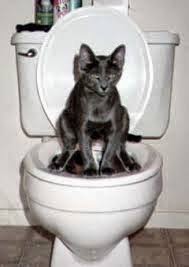
2.      The litter box.  Make sure the box is roomy and comfy for everyone who needs it.  Obese cats and large cats need more space.  As a rule, sides, liners and covers are bad.  Kittens, older cats and the infirm may have a hard time negotiating sides on the box.  Liners are just annoying when kitty   tries to scratch around and cover feces and urine.  Box covers trap smells and block kitty’s view of intruding other cats.  As a cat, one typically likes a 360-degree view while eliminating.
3.      The box placement and number of boxes.  As stated before, one box per cat, plus one, is recommended; and make sure that there is a box on each level of the house.  Put the boxes in well lit, quiet areas away from food and water but close to where the cats spend the majority of their time.
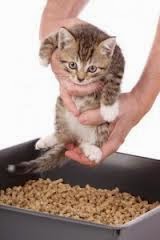
4.      Pick the right litter.  Most cats prefer fine-textured, unscented litter, several inches deep.  If in doubt, try litter box samplers.  Put out several different boxes with several different types of litter - clay, sand, paper litter, or even soil.  Let your cat cast its vote with urine and go with the demonstrated preference. 
5.      Cleanliness.  As a basic rule of thumb, scoop the box daily.  This may not be enough in multi-cat households if one box is particularly popular.  If you ask the cats, they would each want a personal litter box valet that kept the other cats out of the area, looked away while they used the box, handed them a kitty treat as they exited the box, and then removed any offending material immediately.  Always empty and thoroughly clean boxes every 1-2 weeks, depending on use.
6.      Avoid punishment.  Never physically punish your cat for inappropriate elimination.  Not only  is that ineffective, but it quite likely will make things worse.  Punishment will create more anxiety and cats will not connect the crime to the punishment.
7.      Medical treatment.  If your veterinarian uncovers medical issues such as drinking more water or urinary tract infection, treatment plans will need to be determined and implemented.
8.      Anxiety and urine spraying.  Anti-anxiety medications may be utilized.  Drugs such as Prozac, amitryptylline, and busprinone can be  prescribed.  Medication use would need to be discussed with your cat’s doctor.  Such therapy is often life-long, although withdrawal of medication may be considered after long periods of good behavior.  We may also use pheromone sprays, such as Feliway, to promote positive feelings in the cats when they enter the area involved.

        Feline inappropriate elimination is a frustratingly common problem.  It is imperative to act quickly when it happens.  The longer such a problem goes on, the more difficult it may be to correct.  Once the offending cat is identified, take him or her to your veterinarian for a thorough physical examination and have a discussion about your options.  Once medical disease is ruled out, together we may tackle the many issues discussed here and formulate our best plan.  With thought, perseverance, environmental manipulation and appropriate medications, we can  often help.


Timothy R Kraabel, DVM, DABVP (Canine/Feline Practice)
Outreach Chairman, American Board of VeterinaryPractitioners

Monday, August 25, 2014

Help! Why is My Cat Urinating Inappropriately Everywhere?

        First let’s set the record straight.  Your cat does not view its urinary habits as inappropriate, regardless of where the cat happens to pee.  Feline house soiling in the form of urine placed outside the litter box and urine marking are normal feline behaviors.  It is us, the cat owners and feline lovers, who find random urine placement objectionable.  Second, it is no joking matter.  Inappropriate urination is a very common reason cats are relinquished to shelters.  These cats often are not suitable for placement in a new home and many are euthanized.             
         If veterinarians and veterinary staff can help someone understand and solve this problem, they can improve cat owner's lives and may even keep cats out of shelters.
         In multi-cat households, we will need to identify the guilty party or parties.  It is not uncommon that multiple cats may be involved in this outside-the-box activity.  
         For cats that are intact, we need to consider having them spayed or neutered.
         As an important aside, cats never inappropriately urinate out of vindictiveness to their owners.  

Once we know who, then we may consider the myriad reasons a cat may decide that a litter box is not their preferred place to urinate:
1.       Size.  The litter box may be too small
2.       Substrate aversion.  They don’t like the material that is in the box for litter.  Some cats like dirt, or clay, or sand.
3.       Location, location, location.  Perhaps something scary happened where the litter box is and they don’t want to go back.  Maybe it smells funny to them.  Maybe the location next to a loud furnace is a deterrent.
4.       Cleanliness.  They don’t think the cat box is clean enough.  Typically, the litter box needs to be emptied daily to keep cats happy.
5.       Remoteness/distance.  Maybe it is too far to get to the box on time.  Basically, each level of a house needs a litter pan, even if you just have one cat.  This idea is especially important in older cats or any cat with mobility issues.
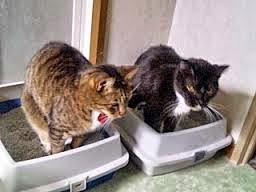
6.       Bullying.  This is very common.  One cat may prevent another from getting to the potty.  A household needs enough boxes to help defuse bullying.  The rule of thumb is  one litter box per cat, plus one.  For example, a three-cat household needs four boxes.  It doesn't matter whether you want four boxes; the cats want four boxes.  And the boxes don’t count if they are located next to each other.  The idea is that the cat that is being a bully can’t possibly patrol all those boxes.  There needs to be physical separation between the boxes.
7.       Anxiety.  In my experience, this is the most common problem.  Other problems like bullying can contribute to this, but separation from the owner is also a common form of anxiety.  If identified correctly, anxiety issues may respond to medication.
8.       Urine marking/spraying.  This is normal communication in the cat world.   This form of urination usually occurs on vertical surfaces and usually the cat will urinate in its cat box as well. Cats may spray when they are threatened or perceive a threat to their territory.  New cats in the house and cats outside may be a trigger for this behavior.  New things like carpet and furniture or moving to a new home also may be triggers.  Cats also may spray out of frustration.  Circumstances  such as enforced diet change and lack of time with their owner may trigger spraying behavior.  
9.       Medical issues.  This needs to be ruled out by our veterinarian.  A thorough exam and a urinalysis will help identify problems and possibly provide a solution.

If you have a feline friend with urinary issues, let us know.  We would be happy to help.

Next week:  solutions and options.


Timothy R Kraabel, DVM, DABVP (Canine/Feline Practice)


Monday, August 4, 2014

Walking the Relay For Life

        This last weekend we participated in Relay for Life at the Vashon Island high school track.  The American Cancer Society sponsors overnight relay walks in communities all over the world to support cancer survivors and their caregivers and to raise money for cancer research.  We had a combined team of clinic staff and our daughter Aubrey's friends.  The relay has someone from each team actively walking at all times from 6:00 PM one night to 9:00 AM the next morning.  Many months ago when Aubrey proposed this walk, it seemed like a good idea.  Aubrey was on the organizing committee for the walk and that made it difficult to decline.  Later, while I was planning the camping needs and logistics with Dr. Fritzler, it seemed very far from a good idea.  Sitting here the next day, it was fun and moving and was well worth the time and effort.
We set up a schedule to have at least two of us walking at all times.  I spent the most of earlier Friday getting the gear ready, preparing the tents and setting up camp for us.  The night started with recognition of survivors and their caregivers and then the teams started to walk.  My son Nick and I took the first hour in the stifling heat with the sun blazing on us, especially whenever we rounded the track and headed west.  Dr. Fritzler had packed a cooler with sandwiches and drinks and snacks were everywhere.  I had set up a two tent compound so people not walking could sleep.  Nick and I were the only guys, so a separate tent for us and Dr. Fritzler seemed prudent to avoid any awkward cuddling incidents through the night with staff and Aubrey's friends.
          As night fell, small bags with lights were put all around the track.  There was a “luminaria” booth that was making the bags throughout the earlier evening.  I hadn’t really understood what it was.  But then the bags were all lit around the track when it was dark and we walked around them.  Each bag had a message to someone that had succumbed to cancer.  It was very sobering and sad and unifying.  So many people are lost to cancer.  Everyone has a story.  There were notes to aunts and uncles, moms and sons, friends, dads, daughters and grandparents.  I wished I had figured out what the booth was before.  My favorite uncle died of lymphoma when I was 16.  He was only 40. 
          Later, Aubrey broke out an endless amount of glowing bling and we were all covered in glow stick necklaces and bracelets.  Joon, Hilari’s 4 year old daughter, could be seen by satellite.  Dr. Fritzler and I took the 11:00- midnight shift and then slept for several hours.  Kas walked on and did over 14 miles total.  She and I did the 4:00-5:00am shift together with my brother.  Johana came a bit after it started and walked with Aubrey and Kas well into the night.
          Morning broke to the teams all still continuing around the track and the music still blaring.  Oddly tasty
pastries with chicken were served for breakfast and a torrential downpour hit as the walk concluded.
          It was a good night. 
Last month we had a management retreat to consider our clinic mission, core values, and goals.  Dr. Fritzler, myself, Johana, our practice manager, Sarah, our head technician, Kas, our head receptionist, and Andrea, our operations manager all met for a weekend.  We spent time considering where the clinic goes from here and what are our values as a group.  One of our core values we talked about is to be involved in the global community.  The relay was a small start and part of pursuing that goal.

We will be back next year and hopefully for many to come.  Next time I’ll put out a light and note for my uncle.

Timothy R Kraabel, DVM, DABVP (Canine/Feline Practice)


Wednesday, July 30, 2014

Man and Man's Best Friend - Remembering Jeff and Partner

            Partner died a number of years ago.  If you asked me when, I would have said it was a few years ago.  I looked it up; he died in 2004.  It seems like I was just in an exam room with him.  I think of Partner often.  He was one of the good dogs.  I see many wonderful patients and wonderful owners and Partner was one of the former.  His dad, Jeff, was one of the latter.  I took care of Partner for the majority of his life.  He was a big German Shepherd that was both serious and silly.  He never enjoyed coming to the vet as much as we enjoyed seeing him.
            We saw Partner a lot during the later three quarters of his life that we knew him.  He was prone to skin infections and allergies.  His skin maladies are common to Shepherds and he took frequent antibiotics to control Staph infections in his skin.  He was also very arthritic in his later years.  We saw him often for Adequan injections for his joints and he took medication for arthritis and pain.  All of this meant that Jeff and Partner knew their veterinarian well.
            Jeff’s daughter called the other day to let me know that Jeff had died.  Jeff was an older man when I met him 17 years ago so I know he had a long life.  To his vet, it certainly seemed to be a happy life as well.  When I met Jeff in the 1990’s, I noticed his address was familiar.  His house was 5 houses from the one I grew up in.  I had been the paper boy for our block when I was a kid.  I remember riding by his house on my bike.  He, however, didn't subscribe to the paper.  I did, eventually, try to forgive him for the slight.  Jeff and I used to talk about “the hood” all the time.   He would tell me the latest.  I would ask about the cast of characters from my time there.  We would reminisce about the old lady that still had her picture window boarded across with plywood and the people that had moved away.  He was bright and funny and had a joyful way about him.  He and Partner were indeed partners in life.  They had one of those special bonds that are a pleasure to watch and fulfilling to experience.  They are what makes veterinary medicine the grand profession it is and the two of them were the type of creatures that motivated James Herriot to put pen to paper. 
I had seen Jeff many times in the years since he lost Partner.  He also had a cat.  It was never as often but when he was in we spoke frequently of Partner.  I think he was the one Jeff never really got over.  I saw Jeff’s own deterioration over the years and watched his memory lapse.  In recent years, his daughter would bring him to the clinic.          
          So long guys.  I said goodbye to Partner years ago but now it is goodbye to Jeff as well.  I trust you are walking together again.  I’m sure Partner's skin is healed and his hips move freely.  I trust also that Jeff is no longer forgetful nor lonely for his friend.  Thanks for stepping into my exam room.  The planet is a better place because you walked on it.

Timothy R Kraabel, DVM, DABVP (Canine/Feline Practice)

Monday, July 21, 2014

The Controversial Non-Anesthetic Dental Cleaning

Dental care is a complex issue in veterinary medicine.  Perfect dental care for pets is rare.  Complete homecare can be difficult and more extensive dental care has traditionally always required anesthesia. We provide non-anesthetic dental procedures and we believe these cleanings are an invaluable part of a complete dental program.  At our hospital, non-anesthetic dental cleanings are performed by technicians from Animal Dental Care. They are a company of highly trained veterinary dental technicians that come to our practice.
The non-anesthetic dental (NAD) is an oral assessment and charting, teeth cleaning and polishing done with gentle restraint.  The NAD should be used only with patients that have minimal, early (stage 1) dental disease who are easy to handle.  Because the patient is not asleep, it is not possible to mirror all that can be done in an anesthetic dental procedure.  Deeper disease may be missed in non anesthetic procedures.  Behavior issues and patient compliance can interfere.  Dental radiographs, extractions, and some level of assessment simply is not possible awake.  The NAD and the anesthetic dental should be considered as two distinct procedures.  You and your veterinarian need to determine, often along with the trained dental technician, if a NAD is appropriate.  As noted, we have to consider how much dental disease is present and your pet’s temperament.  During preventive cleanings, Animal Dental Care technicians also may find disease that requires further care under anesthesia.
“Dental” procedures are also often done at pet shops and groomers without anesthesia and without the supervision of a veterinarian.  This easily may lead to pets with too high a degree of dental disease receiving incomplete and inappropriate dental care.  There is no benefit to simple removal of the tartar if deeper issues are present.     
Non-anesthetic dentistry is a controversial topic in veterinary medicine.  There are those that believe dental procedures should never be performed without anesthesia.  They believe that it is not possible to accomplish significant dental cleaning and assessment awake.  We disagree with this.  The technicians with Animal Dental Care have demonstrated over many years and hundreds of patients that they can effectively treat early dental disease.  As long as we select the right patients, good can be done with the NAD.  The best times for us to recommend a non-anesthetic procedure are early in life when there is minimal tartar and in between anesthetic dental cleanings when the tartar build up is low.

We believe providing non-anesthetic dentistry for the right patients in the right circumstances is the best dental care for our patients.  Feel free ask us for more information.

Timothy R Kraabel, DVM, DABVP (Canine/Feline Practice)